💡 Life's Lesson from this story
"La superbia e l'arroganza portano alla caduta; l'umiltà è il cammino verso la saggezza."
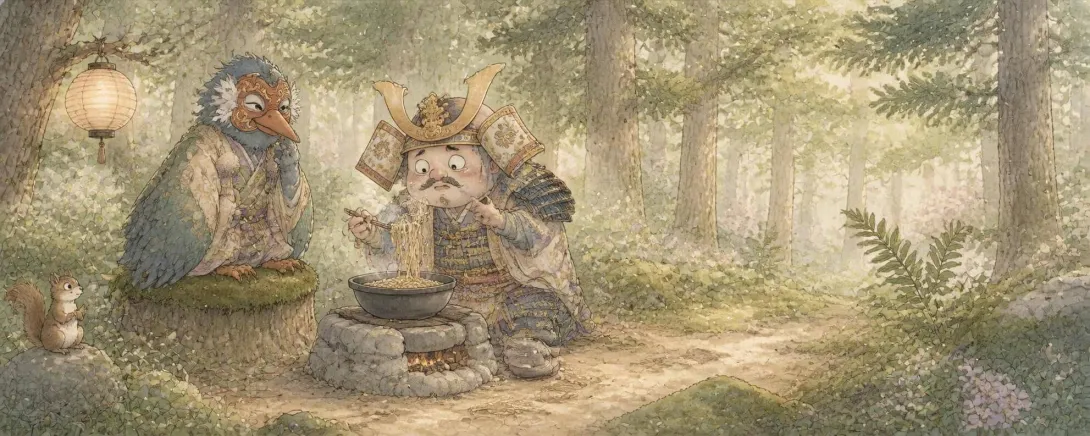
Il Tengu, un potente creature simile a una uccello, fu punito per la sua superbia quando si rifiutò di insegnare umiltà al falso signore. Questa storia insegna ai bambini che essere orgogliosi delle proprie abilità o dello stato può essere dannoso e che rimanere umili è importante. Imparando da questa lezione, i bambini possono evitare di commettere errori simili nella loro vita.
🗺️ Cultural Context
In Giappone feudale, intorno al XVII secolo, in montagna a Hokkaido, nacque la storia tradizionale "Il Tengu e il Signore Stolt" per ammonire i bambini sull'umiltà e sul rispetto per la natura. Questa antica fiaba ancora oggi mantiene un significato culturale importante, ricordando a tutti che anche con potere e ricchezza, si deve sempre rimanere gentili e consapevoli del mondo intorno a sé.
📚 Word of the Story
- Tengu — a mythical bird-like creature from Japanese folklore
- Sakura — a type of cherry blossom tree, often associated with spring in Japan
- Zen — a way of thinking and living that emphasizes peace and calmness
💬 Let's Talk About It
1
What can we learn from the tengu's clever tricks and how does this relate to being wise?
2
How did the foolish lord's pride lead him into trouble and what would have happened if he had been more humble?
3
Can you think of a time when someone who was considered clever or wise made a mistake because they weren't thinking clearly?