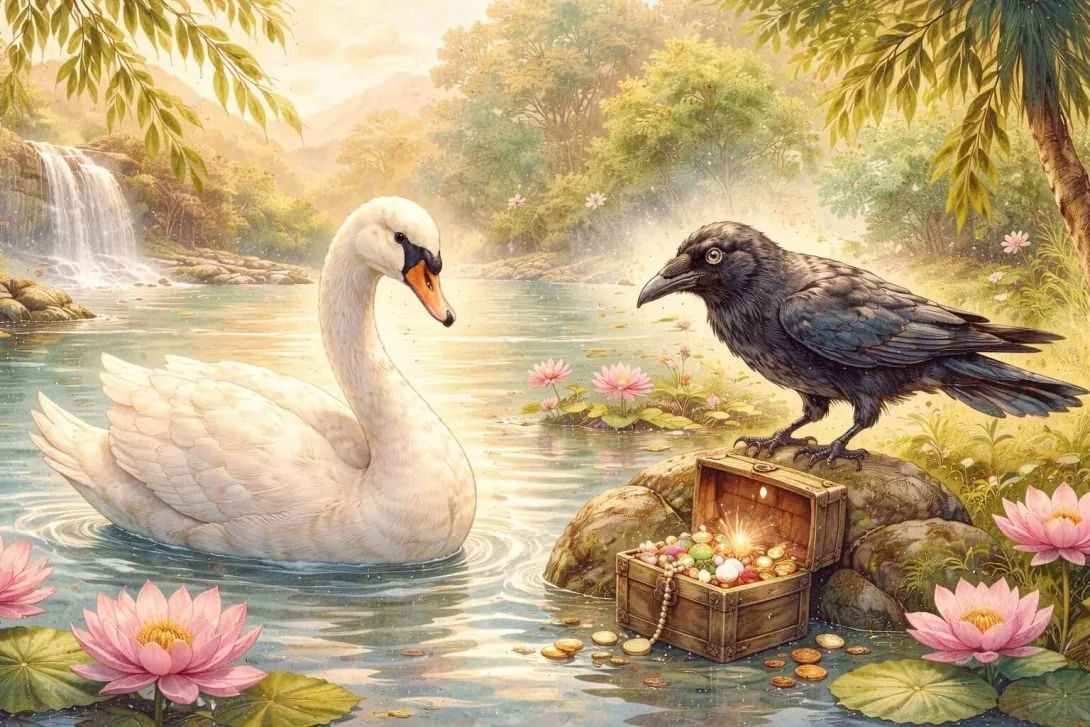
تَقربت روكُمينى كَويري بِأقدام هادئة وَمجففة. "لماذا أخذت أَصلح العُشبة؟" السالمة الهادئة. نظرت كَويري لَحبذا المسرح الذي تَلفت بين رُيشها السوداء، وأعرف أنها لا تستطيع إنكار ما فعلته. ولكنّها بدلا من تَأسفها، قالت: "أصبحنا أَنعم في مظهرنا!" الآن أنا الطائر الأَحبى في الغابة."
جاوَبَت روكُمينى كَويري بِعبارة مُضنَّدَة لها : "الجماليَّة الحقيقية ليست في المظهر الخارجي، وإنّها في مَظاهر القوى الأَنفُس. أَنتَ قد حازت هذا العُشبة بِبنانك، ولكن لِماذ كُلفت؟ أَنتَ تَحكم الآن عَلّاً فَوقاً، لكن صَدور قلبك ظالم." نظرت كَويري في عَمق الذات وقرّأت: أَنها كانت ناصية من أَنفُس الخِدم، لا خادعة لذة مُحتال.
💡 Life's Lesson from this story
لا يؤدي الجبن والاستكبار إلى الهزيمة، ويكون الخضوع سبيلًا للعظيم.
🗺️ Cultural Context
📚 Word of the Story
- Vigilant — Watching carefully to prevent trouble or danger
- Elegance — A quality of being beautiful and refined in appearance or movement
- Nocturnal — Active at night rather than during the day
💬 Let's Talk About It
What do you think the crow learned from his experience of getting punished for stealing from the swan, and how can we apply this to our own lives?
How does the swan's behavior in the story show that it values honesty and integrity, and what message do you think the author is trying to convey through her character?
Do you think the crow was sorry for his mistake when he finally confessed to the swan, or was he just afraid of getting caught again?