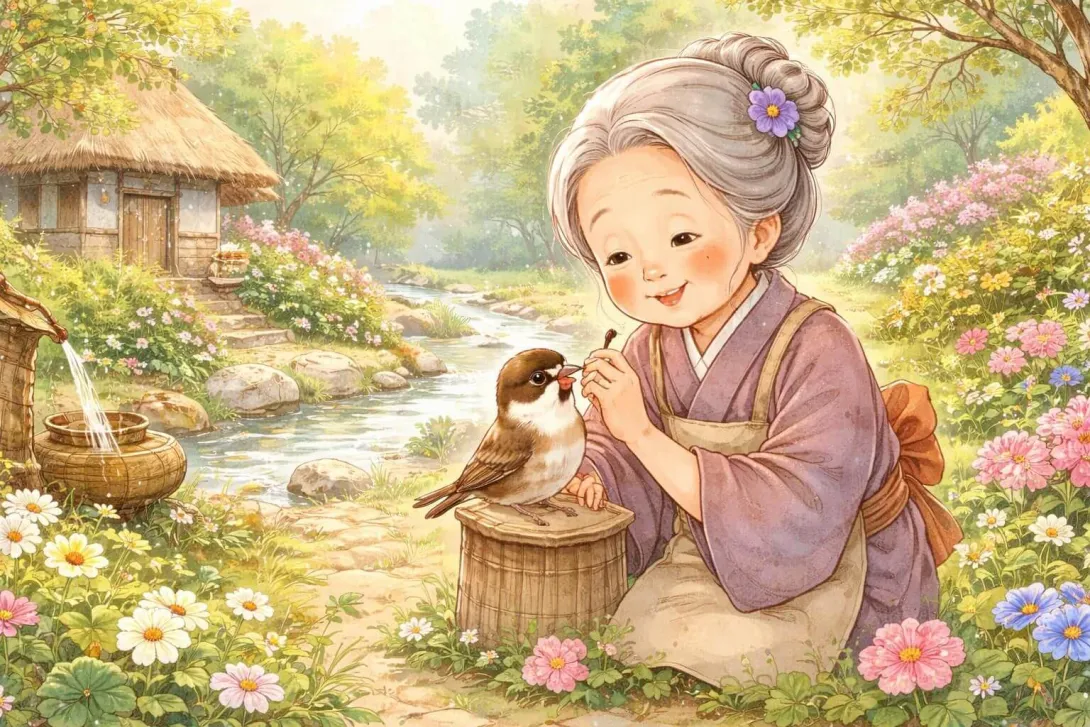
In a small village nestled in the mountains of Japan, there lived a little sparrow named Yataro. Yataro loved to sing sweet melodies that echoed through the cherry blossom trees and brought joy to all who heard them. His bright, round eyes sparkled with kindness, and his soft, fluffy feathers shone like silk.
One day, while flitting from branch to branch, Yataro overheard a group of villagers gossiping about him. They were talking about how he always sang so cheerfully, even on the gloomiest days, and how it seemed almost... artificial. One sly old cat, named Miko, whispered that Yataro must be hiding something behind his bright songs. The villagers laughed and whispered among themselves, but their words cut deep into Yataro's heart.
As Yataro flew back to his cozy nest, he felt a pang of sadness. He didn't understand why the villagers wouldn't appreciate his singing. But when he landed on a branch, he noticed something peculiar – a tiny thread stuck to his beak. Curious, he plucked it off and examined it closely. It was a piece of Miko's own tail!
The next day, while Yataro sang with all his heart, the villagers gathered around him once more. This time, however, they noticed that the sparrow's song had changed – it was tinged with sadness and longing. Miko crept closer, thinking she'd finally caught Yataro in a lie. But as the sparrow trilled on, a tiny droplet of blood fell from his beak. The villagers gasped, and to everyone's surprise, they saw that Yataro had actually cut out his own tongue with the thread!
The villagers were shocked, but also amazed by the truth. Miko slunk away, her tail hanging low in shame. From that day on, Yataro sang a new song – one of quiet courage and conviction. His melodies still brought joy to the village, but now they carried a deeper meaning, reminding everyone that sometimes, it's better to speak your mind than try to hide behind artificial smiles.
As the villagers learned from Yataro's story, they realized that true happiness comes not from pretending to be something we're not, but from being brave and authentic. And so, every time Yataro trilled his song, his friends would listen with open hearts, grateful for the sparrow's wisdom and courage to speak his truth, even if it meant speaking from a quiet heart.
💡 Life's Lesson from this story
"Wastefulness brings poverty, but thriftiness ensures a steady supply of food."
🗺️ Cultural Context
💬 Let's Talk About It
What do you think would happen if we all acted like Hua Luogeng and shared everything with others?
Can you imagine a world where everyone is kind to each other like the farmer who took care of the sparrow, and how it might be different from our own world?
How does the story show that being greedy can lead to trouble, and what are some ways we can avoid being too focused on getting more things?