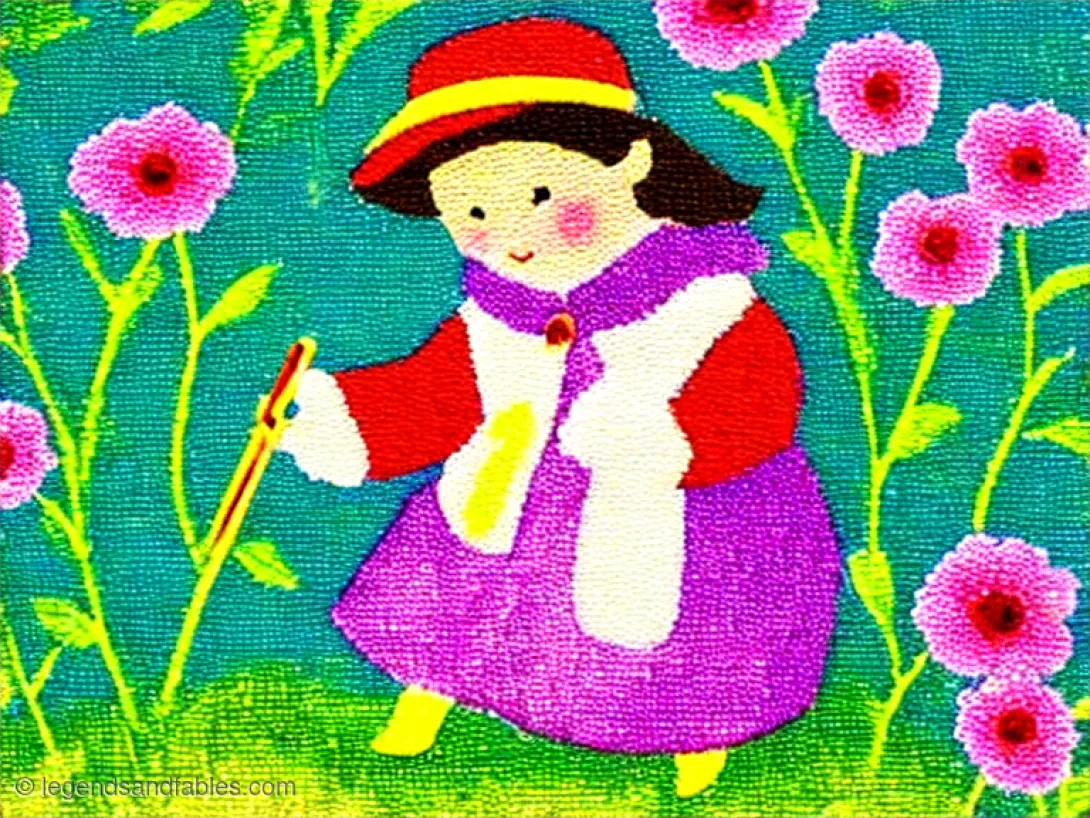
In a small village nestled between two great mountains, there lived a young apprentice named Liang. He was learning the art of painting from his wise teacher, Master Wang.
Liang loved nothing more than to spend his days practicing brushstrokes and mixing colors in the studio. His fingers moved with ease as he dipped his brush into vibrant paints, creating beautiful scenes on rice paper. Master Wang smiled often at Liang's talent, but also warned him of the dangers of ambition.
One day, while out gathering materials for their next project, Liang stumbled upon an old shop hidden behind a tattered curtain. The sign above the door read 'Antique Curios and Wonders'. Intrigued, he pushed open the door to reveal a dimly lit room filled with dusty trinkets and mysterious artifacts.
Inside, he met the eccentric owner, Mr. Zhang, who introduced him to an extraordinary item: a magic paintbrush said to capture reality itself on paper. Liang was enchanted by the brush's promise of bringing art to life, and with Master Wang's permission, purchased it for a handsome price.
Excitement coursed through Liang as he unwrapped the brush from its silk wrapping, feeling an unusual energy emanating from it. With each stroke, colors danced across the paper, forming three-dimensional scenes that seemed almost too real to be true. Liang's talent soared with this enchanted tool, but his ambition grew at an alarming rate.
As news of the magic paintbrush spread, people began to request Liang's paintings for their own gain: a beautiful garden to attract customers, or a majestic dragon to intimidate foes. The weight of these expectations crushed him, as he felt pressured into creating art that served others rather than bringing joy himself. Liang tried to resist, but the magic brush seemed to have a will of its own.
One evening, as the village was asleep, the paintbrush glowed with an otherworldly light. It spoke in a whispery voice: 'You've lost sight of true artistry, young one.' With that, the magic dried up, leaving only blank sheets and Liang's heart heavy with regret.
Master Wang appeared at his doorstep, wise eyes shining with understanding. He took the paintbrush from Liang and, gently stroking its handle, said, 'The true secret to art is not in capturing reality but in expressing one's own spirit.'
💡 Life's Lesson from this story
Honesty is the best brush stroke, even if it covers up mistakes.
🗺️ Cultural Context
📚 Word of the Story
- Word — Mysterious - Something that is hard to understand or seems strange and interesting.
- Word — Ancient - Very old, from a long time ago.
- Word — Generous - Willing to give something freely without expecting anything in return.
💬 Let's Talk About It
What did the young artist learn from his magic paintbrush that taught him a valuable lesson about kindness?
How do you think Liang Kung felt when he was treated unfairly by the cruel governor, and what could have been done to show more generosity?
Can you imagine a scenario where the magic paintbrush's power is used to bring about justice for someone who has been wronged, what would happen next?