In a lush forest near the bustling city of Corinth, a cunning wolf named Lupus lived a life of stealth and deception. With his tawny coat and piercing gaze, he had fooled many a villager into thinking him harmless.
Lupus befriended a gentle ewe named Ovis, who grazed on the outskirts of the forest with her flock. Enchanted by Lupus's charming ways, Ovis invited him to join their peaceful gathering. The other sheep, however, sensed something amiss about Lupus's intentions and whispered warnings to each other.
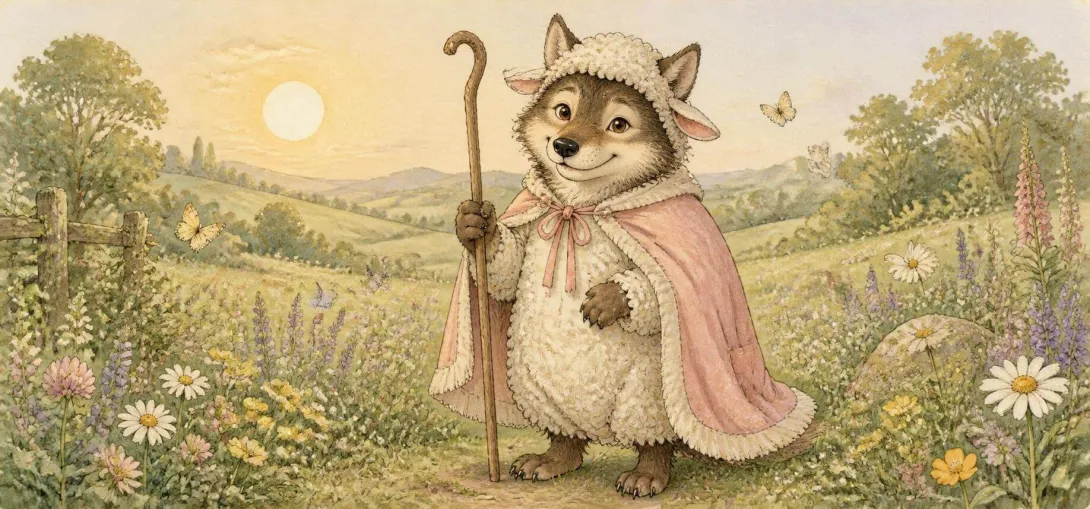
One sunny afternoon, a wise old ram named Castor led his flock on a stroll through the forest. As they chatted and laughed together, Lupus appeared, dressed in Ovis's own woolly coat, which he had cunningly stolen from her shed. The other sheep welcomed him warmly, unaware of the wolf's true nature.
But when night began to fall, the moon casting long shadows across the forest, Castor noticed something odd about Lupus. His eyes seemed to gleam in the dark, and his movements were quicker than a lamb's. Suddenly, Lupus's disguise slipped, revealing his razor-sharp teeth and claws beneath.
The sheep fled in terror as Lupus chased after them, his cries echoing through the forest. Castor stood firm, refusing to run, and spoke words of wisdom: "Deception may seem sweet, but it brings ruin in its wake. Be true to yourself and others, for honesty is always the best course."
As the night wore on, Lupus realized the error of his ways and returned to his own form. Ashamed, he vowed never again to don a disguise to deceive those who trusted him. From that day forward, Lupus roamed the forest as himself, respected by all for his contrite heart.
The flock of sheep welcomed Lupus back into their fold, but with caution this time, knowing the dangers of deception and the value of honesty. As they grazed together under the warm sun, Castor shared a gentle smile: "Even in mistakes, we can find redemption, and that is the greatest lesson of all."
💡 Life's Lesson from this story
Deception is a disguise that hides true nature and intentions.
🗺️ Cultural Context
📚 Word of the Story
- deceitful — behaving dishonestly to achieve a goal
- pretending — acting like something you're not
- disguise — covering up your true appearance
💬 Let's Talk About It
How can the wolf's actions teach us the importance of being honest and true to ourselves?
What would have happened if the sheep had been more cautious when trusting the wolf's disguise?
Can you think of a time when someone pretended to be something they're not, and how did it affect your feelings?