
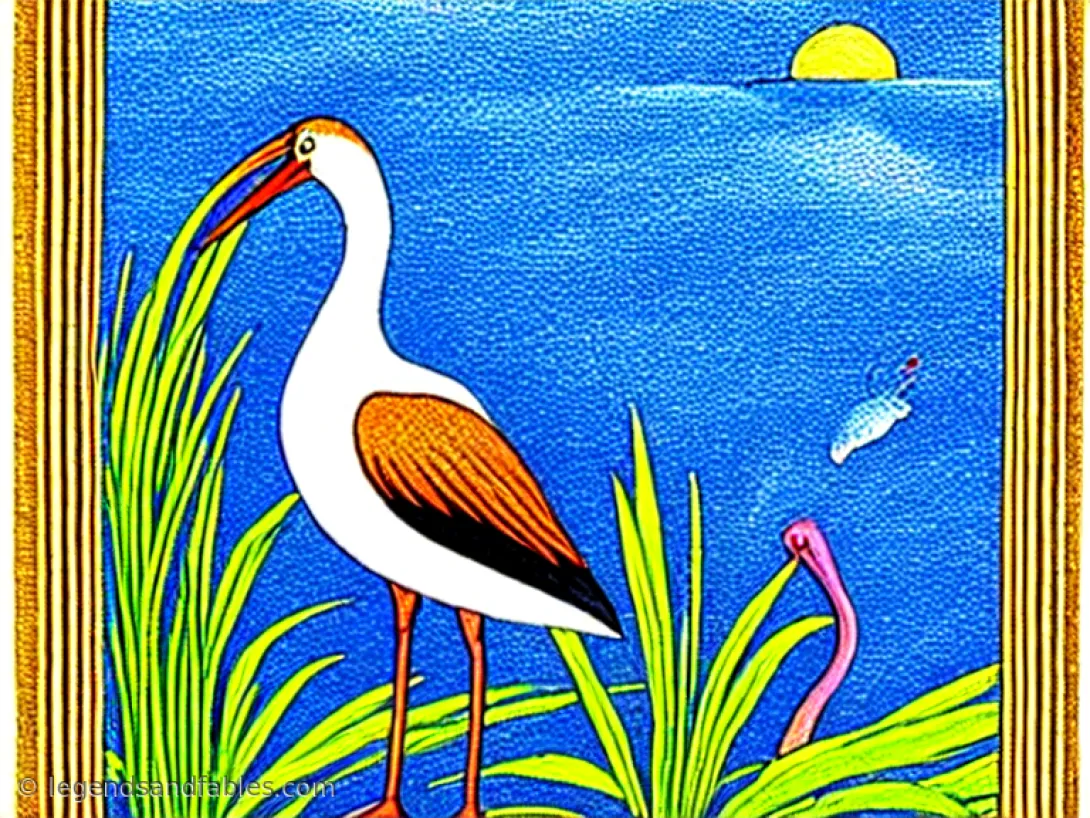
In the land of Kemet, where the sun shone bright and the Nile River flowed gently, there lived a kind and gentle goddess named Renpet. She was loved by all the animals in the kingdom, for she would often come down from her throne to play with them.
One day, while wandering through the lush green fields, Renpet came across two little birds, Nebet and Kem. They were perched on a branch, chirping happily as they sang a sweet melody. Renpet was enchanted by their voices and decided to join in. Together, they created a beautiful harmony that filled the air.
Renpet had always been fascinated by the Ibis bird, which was known for its striking curved beak. She wanted to learn from its unique feature, so she asked Nebet and Kem if they knew why the Ibis bird's beak was shaped the way it was. They thought for a moment and then said, "We think it might have something to do with the great goddess Hathor."
Renpet decided to seek out Hathor's wisdom on the matter. She traveled to the temple where Hathor resided, surrounded by her sacred symbols of music and joy. The goddess welcomed Renpet warmly and asked why she had come. Renpet explained how she admired the Ibis bird's curved beak and wanted to know its secret.
Hathor smiled knowingly and said, "Ah, my dear Renpet, the Ibis bird's beak is a gift from me, for it allows them to drink nectar from deep within flowers. They use their special beaks to scoop up the sweet liquid, bringing joy to themselves and all who see them." Renpet was amazed by Hathor's wisdom and thanked her for sharing the story.
As she returned to Nebet and Kem, they asked her what she had learned. Renpet shared with them the tale of the Ibis bird's curved beak, and how it brought happiness to all who saw it. From that day on, whenever an Ibis bird perched on a branch, its unique beak would remind everyone of the gift from Hathor – a symbol of joy and sweetness in their lives.
Renpet continued to visit Nebet and Kem often, singing with them as they soared through the skies. And every time she saw an Ibis bird, she remembered the story of how its curved beak brought happiness to all who beheld it.
💡 Life's Lesson from this story
Humility and kindness lead to true beauty and a full life.
🗺️ Cultural Context
📚 Word of the Story
- Migratory — Traveling long distances at certain times of the year to find food or better weather
- Savannah — A large area of grasslands with few trees, often found in warm countries
- Tendrils — Long thin stems that plants use to climb up other objects.
💬 Let's Talk About It
What clever thing do you think the ibis bird did to get its curved beak in a way that helps it eat and survive?
How do you think the ibis bird would help other animals if it had extra food or resources, considering how kind it was rewarded with its unique beak?
Can you think of a time when being kind to someone led to something good happening for them, just like what happened to the ibis bird?