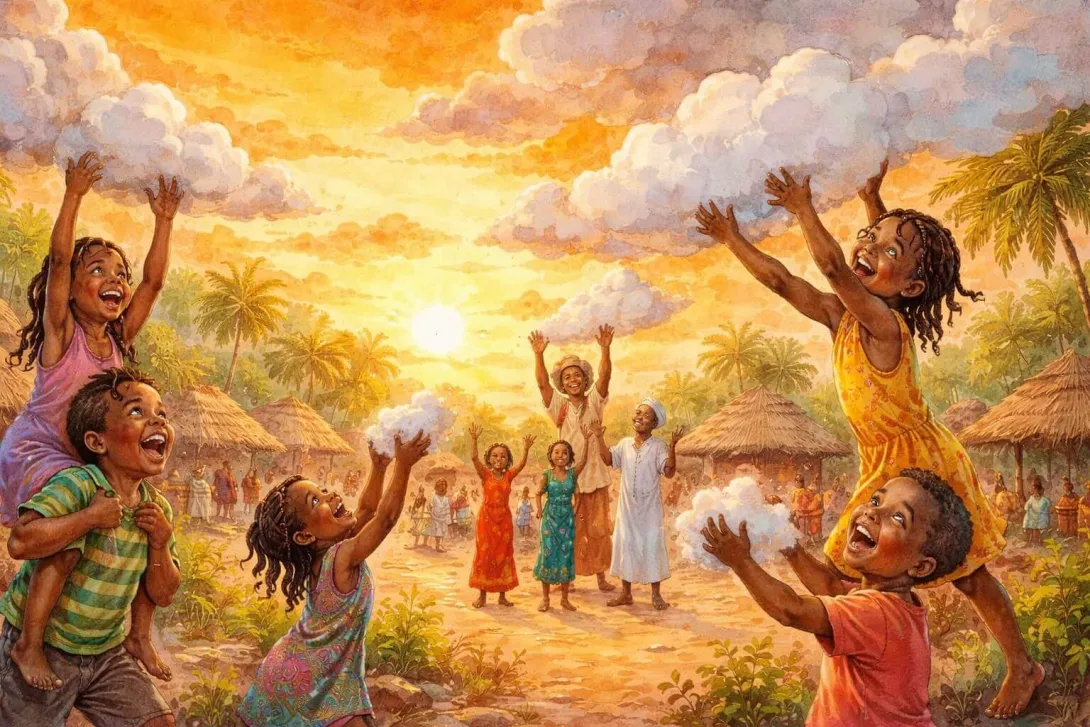
Long, long ago, the sky was not far away as it is today. It hung low — so low that people could reach up and pinch off pieces of it to eat whenever they were hungry.
The sky was delicious. It tasted of whatever you most needed: sweet honey when you were sad, warm bread when you were cold, fresh rain when you were thirsty. No one ever went hungry. No one ever needed to plant crops or hunt or work.
But the sky made one rule: take only what you will eat. Never, ever waste a piece of sky.
For many years, the people obeyed. But as time went on, they grew careless. A greedy woman cut off a great chunk of sky for a feast — much more than all her guests could eat. Her husband piled his calabash so full that he could not lift it. Children broke off pieces for sport, chasing each other and laughing, letting the sky fall to the ground.
The sky grew quiet. Then it spoke — a voice like deep thunder rolling across the hills.
"I have fed you without complaint. I have asked for nothing but respect. But you have wasted my gifts again and again."
And slowly, with great dignity, the sky began to rise.
Up and up it went, lifting itself beyond the reach of the tallest person, beyond the trees, beyond the mountains, until it sat where it sits today — high and beautiful and out of reach.
After that, the people had to learn to plant seeds, to tend animals, to work the earth and store food for the dry season. It was harder. But they were grateful for every meal in a way they had never been before.
And sometimes, on a clear day, when you look up and see the blue sky spread above you, you can remember what was lost — and choose to never waste what you are given.
💡 Life's Lesson from this story
When we take gifts for granted, we risk losing them. Gratitude means treating every blessing - however small - with care and respect.
🗺️ Cultural Context
📚 Word of the Story
- Calabash — a large bowl or container made from a dried gourd, used across Africa for carrying food and water
- Waste — to use more of something than you need, or to throw away something valuable
- Dignity — a calm, proud, and respectful way of behaving
💬 Let's Talk About It
Why do you think the sky left? Was it fair?
What would you do if you had food that tasted like whatever you most needed?
What is one gift in your life that you want to make sure you never take for granted?