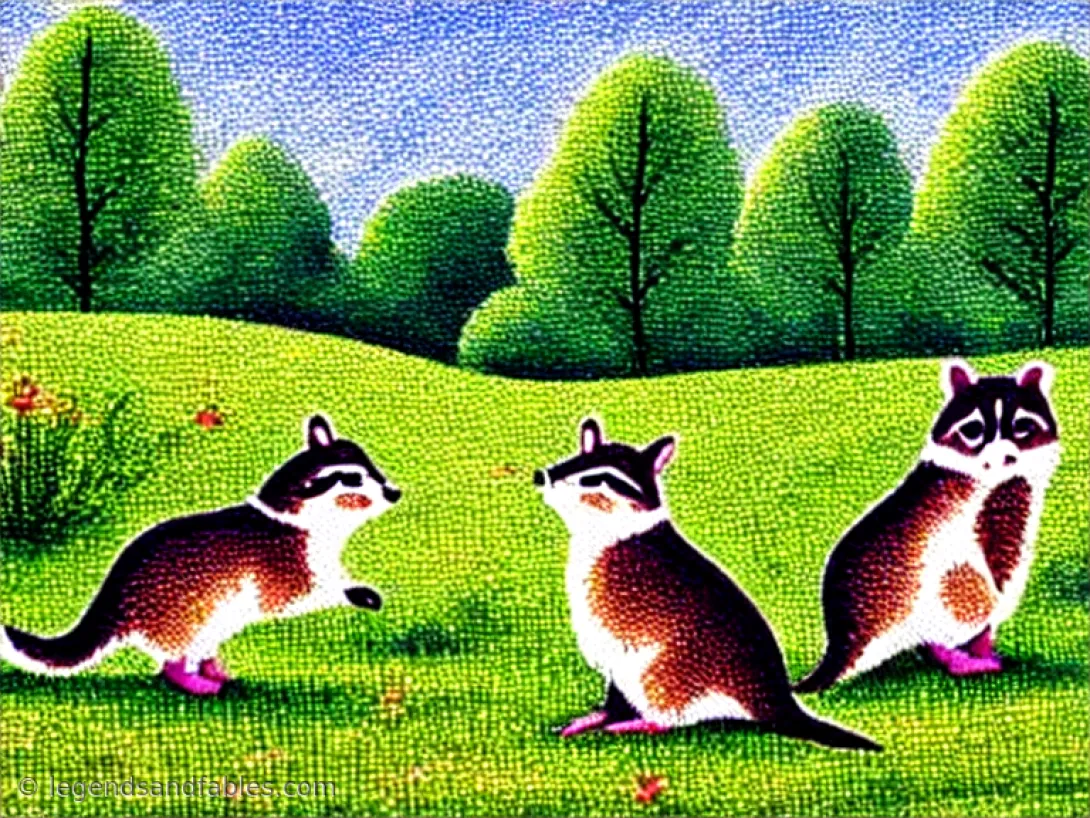
In a lush valley surrounded by towering trees, a wise old owl named Makwa called upon all creatures to gather at the sacred Medicine Rock. The sun was high in the sky, casting a warm glow over the assembly. Makwa announced that it was time for the Great Race of the Birds and Animals.
Many animals had grown weary from the summer's heat, while others were anxious to test their speed and agility. The mighty bison, Takoda, flexed his powerful muscles as he prepared to take part in the competition. A sleek coyote named Wapi, with eyes shining bright like stars on a clear night, also joined the gathering.
The birds of the valley had not forgotten the previous year's contest, when a swift young eagle named Wanona had taken the prize. Makwa declared that this year's course would wind through the forest, across rushing streams, and over gentle hills. The starting gun, a small stone held by a wise old badger named Nanabozho, was about to be released.
The animals took off with a burst of energy, their footsteps echoing through the valley. Takoda led the pack, his massive body thundering across the forest floor. Wapi darted and weaved between trees, her agility allowing her to navigate tight spaces with ease. Wanona soared above the treetops, her wings beating swiftly as she scanned the course below.
As the competitors neared the finish line, a small rabbit named Kanaq suddenly appeared at the front of the pack. With incredible speed and agility, she dodged low-hanging branches and leapt over obstacles, leaving all others in her dust. When Makwa announced that Kanaq had crossed the finish line first, a great cheer erupted from the assembly.
Makwa praised each competitor for their hard work and determination. He reminded them that true greatness lies not in winning or losing, but in the joy of participating and striving to be one's best self. From that day forward, the animals and birds of the valley cherished their differences and celebrated the unique qualities that made each one special.
The Great Race became an annual event, a time for friends and foes alike to gather, run, and remember the lessons learned beneath Medicine Rock. And as for Kanaq, she remained beloved throughout the land for her remarkable speed and spirit of adventure.
💡 Life's Lesson from this story
Respect and care for nature, for it is our home and our future.
🗺️ Cultural Context
📚 Word of the Story
- Assuming you meant "The Great Race" as a hypothetical or fictional story, here are three vocabulary words that children aged 6-10 might not know —
- word — Perspicacious
- definition — Having a good understanding and keen insight
💬 Let's Talk About It
What did the birds learn from participating in the great race, even though they weren't the fastest?
Did you think it was fair that the winner of the great race received a reward, while the other participants didn't get anything?
How would the story have been different if the animals and birds had worked together as a team to prepare for the race instead of competing against each other?